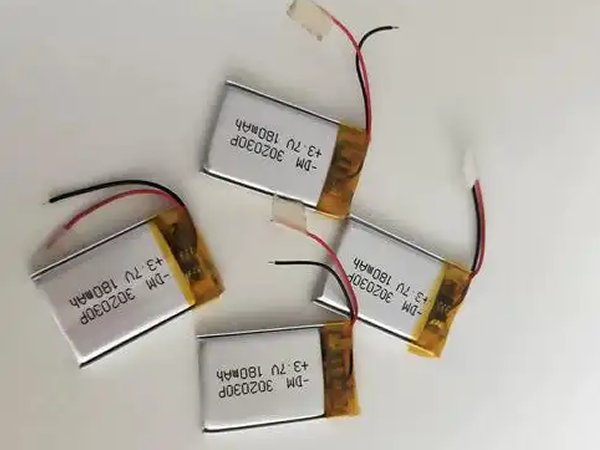
A new type of polymer lithium-ion battery with independent intellectual property rights has been successfully developed and is about to be put into industrial production. This unique battery technology is another important achievement made by researchers led by Dr. Qi Lu, who returned from overseas four years ago, following the liquid aluminum-plastic film lithium-ion power battery. At present, the production line for polymer lithium-ion batteries is under construction.
It is understood that liquid lithium-ion batteries are one of the important achievements in high-tech research in recent years, representing the most advanced level of current chemical power development. Due to its significant advantages such as high specific energy, cyclic use, and good lifespan, this type of battery has been widely used in electronic devices such as mobile communications, cameras, and laptops, and is gradually expanding its application scope to fields such as electric bicycles and electric vehicles. It is estimated that the global demand for lithium-ion batteries has reached 1.3 billion units, and it is increasing year by year with the continuous expansion of application fields.
Along with the successful commercialization of liquid lithium-ion batteries, research on polymer lithium-ion batteries (PLIB) has been receiving special attention. As a new generation lithium-ion battery system, PLIB not only has all the technical advantages of liquid lithium-ion batteries, but also has higher specific energy and better safety performance. In addition, PLIB is recognized as the battery product with the greatest development potential and application market in the future. It is predicted that in the next few years, PLIB will replace nearly 50% of the market share of liquid lithium-ion batteries, with broad development prospects, and is one of the key investment and research directions for many large battery manufacturers such as Japan.
In the past, domestic and foreign polymer lithium-ion battery manufacturers mostly used the Bellcore process from Bell Laboratories in the United States for production. However, due to the cumbersome process, low efficiency, large equipment investment, and high production costs of this method, it seriously restricts the development and industrialization of polymer lithium-ion batteries. In recent years, there have been so-called polymer lithium-ion battery products in domestic and international markets, but in fact, they are liquid flexible packaging batteries with a large amount of flowing electrolyte inside, which does not have the characteristics of polymer electrolytes and poses safety risks. With the rapid increase in the use of lithium-ion batteries in the communication and IT industries, the safety performance of batteries is becoming increasingly prominent, requiring not only excellent electrical performance but also higher safety performance.
After several years of research and development, the Beijing CITIC Guo'an League Guli New Materials Technology Research Institute and the Peking University New Energy Materials and Technology Laboratory have synthesized a unique microporous polymer composite membrane by integrating multiple key material technologies. Then, a unique polymer battery production process was used to develop a polymer lithium-ion battery. This battery has excellent low-temperature discharge performance and cycling performance (over 500 cycles). Compared with liquid flexible packaging batteries of the same capacity, this type of polymer lithium-ion battery exhibits unique advantages in safety performance testing such as overcharging and needle punching. Importantly, the new polymer lithium-ion battery production process developed by Dr. Qi Lu and his researchers also has the characteristics of low equipment investment and simple production process. This achievement with independent intellectual property rights will undoubtedly enhance the competitiveness of China's battery manufacturing industry internationally, promote the development of the domestic polymer lithium-ion battery industry, and greatly broaden the application scope of lithium-ion batteries in the future.





 Follow Us
 18924628402
 E-mail
