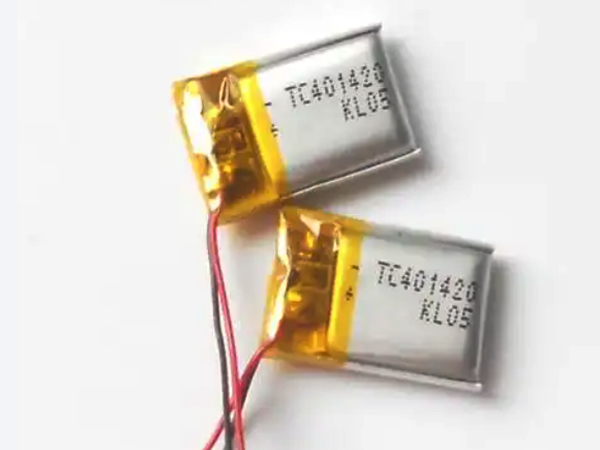
Polymer lithium batteries are the third generation lithium-ion batteries developed on the basis of existing steel and aluminum shell batteries, characterized by lighter, thinner, and higher energy density. Polymer lithium batteries not only have all the technical advantages of lithium-ion batteries, but also have higher energy and better safety performance.
In order to confirm that the safety performance of polymer lithium batteries is higher than that of traditional lithium-ion batteries, lithium battery experts have conducted thorough experiments and tests. Polymer battery cells have obtained international certifications such as CE and RoHS, ensuring high quality and safety reliability. After the successful initial trial of polymer lithium-ion batteries, they have been widely used in various mobile digital products from well-known manufacturers around the world, such as iPod, Samsung, LG, MOTO, etc.
Polymer lithium batteries are not only used in mature digital devices mentioned above, but also in some new high-tech products, and have achieved initial results. In the past two years, a new type of mobile power bank has fully utilized the characteristics of polymer lithium batteries, such as light, thin, and high energy density, to achieve the ability to provide power for mobile phones, digital cameras, handheld computers, game consoles, etc. without the need to connect to a power source mp3、mp4、 The charging function of Bluetooth earphones greatly solves the problem of power shortage in mobile digital products.
Multiple advantages safeguard polymer lithium batteries, and safety issues are the top priority for products related to "electricity". Due to the use of aluminum-plastic flexible packaging in the structure of polymer lithium batteries, which is different from the metal shell of traditional liquid batteries, in the event of a safety hazard, traditional liquid batteries are prone to explosion, while polymer batteries can only inflate and will not cause any personal injury or property safety issues. In addition, the engineering prototype of polymer lithium batteries is equipped with a fully automatic protection board, which can effectively protect against short circuits, overcharging, and overdischarging, without worrying about overcharging or insufficient charging. This provides sufficient safety assurance for products using this type of battery cell, with safety features far superior to traditional liquid lithium-ion batteries.
When it comes to digital products, terms such as "light" and "thin" are difficult indicators to avoid. The weight of the battery directly affects the overall quality of digital products. Due to the fact that polymer batteries are 40% lighter than steel shell lithium batteries of the same capacity specification and 20% lighter than aluminum shell batteries, the weight of digital products using them is greatly reduced. In addition, the thickness of polymer battery cells can be reduced to below 2mm, which will not affect the thinness of digital products. At the same time, polymer batteries have a capacity 10-15% higher than steel shell batteries of the same size specifications, and 5-10% higher than aluminum shell batteries. The VDL power supply mentioned above, due to the exclusive use of polymer lithium battery cells, has a body size of only 100mm × 55mm × 17mm, achieving compactness, fashion, and lightweight, greatly meeting the needs of outdoor carrying. Compared with similar products, VDL power supply achieves the maximization of energy volume ratio.
It is worth mentioning that due to the sufficient safety of the materials used in polymer battery cells, PTC and fuses are omitted in the design of battery protection circuits, thereby saving battery costs. In addition, the internal resistance of polymer battery cells is smaller than that of general liquid battery cells, greatly reducing the battery's self consumption and extending the standby time of digital products to a certain extent. Taking the above-mentioned mobile power bank as an example, a fully charged VDL Li Po power bank has a battery capacity equivalent to 4-7 times that of a regular mobile phone battery or digital camera, which means that it can charge the phone or digital camera 4-7 times or more. For ordinary MP3 players, Bluetooth earphones, CD players, repeaters, etc., VDL Li Po power supplies can be charged 10-15 times or more; In addition, lithium polymer batteries can be designed in any shape, and the thickness of the battery cells can be increased or decreased according to customer needs. Some can even be customized according to the shape of mobile phones, digital cameras, etc., to fully utilize the space of the battery casing and improve battery capacity. It also has environmental characteristics such as no leakage, no heavy metals, and no pollution. At present, products using polymer battery cells are rapidly increasing and quietly becoming popular, becoming an essential and ideal choice for mobile life.
It is imperative for polymer lithium batteries to become mainstream. Polymer lithium batteries have advantages over traditional liquid lithium batteries in terms of safety, volume, weight, capacity, and discharge performance. In the past, domestic and foreign polymer lithium-ion battery manufacturers mostly used the Bellcore process from Bell Laboratories in the United States for production. However, due to the cumbersome process, low efficiency, large equipment investment, and high production costs of this method, it seriously restricts the development and industrialization of polymer lithium-ion batteries.
In recent years, based on extensive laboratory work and the integration of multiple key material technologies, some domestic enterprises have successfully developed polymer lithium-ion batteries. By 2005, polymer lithium batteries had accounted for about 1/4 of the world mobile phone battery market.
Polymer lithium-ion batteries are considered to be the most promising and applicable battery products in the future. It is expected to replace nearly 50% of the market share of liquid lithium-ion batteries in the next few years, with broad development prospects, and is one of the key investment and research directions for many large battery manufacturers in Japan, China, and other countries. Polymer lithium-ion batteries are increasingly becoming the preferred choice for the new generation of mobile digital devices, and will become a new generation product to replace traditional liquid lithium batteries in the future. It is also the mainstream trend in the development of lithium-ion batteries.





 Follow Us
 18924628402
 E-mail
